Showing posts with label satire. Show all posts

Monday, June 3, 2013

Thoughts on the new season of "Arrested Development"

At long last, I've powered through the debut season of the new Arrested Development. I've been a fan of the show since a year after it went off the air and discovered its wonders from my peers (did somebody say "wonder"?). Now I'm as big a fan as they come, and AD remains one of the greatest comedies of the 2000s. I expected it to be a little different this time around, what with the different format and the longer episodes. I think it's well-suited to the style of AD, with the interwoven narratives that close the knot (and leave some open for another season...which we may in fact have!). It unfolds much like a novel, with unanswered questions that will get you to read the next volume. On a related note, if this format catches on, we could replace the word "season x" with "volume x" like graphic novels.

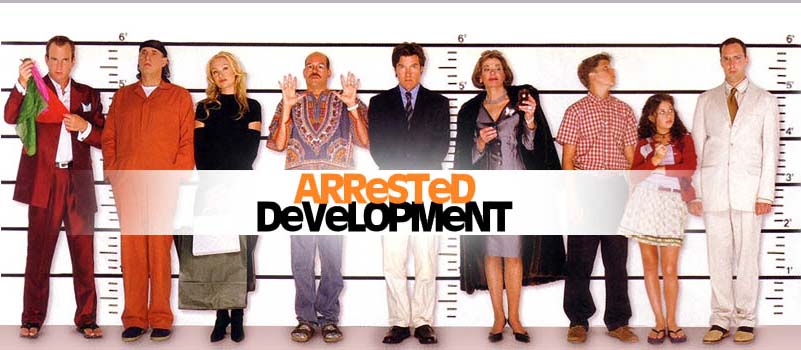
Old promo image...
Warning, spoilers....

In this season, each episode focuses on a different character, and at this point the Bluths have gone their separate ways, more or less. Not all of the Bluths are in every episode, so you may miss a character from time to time (I did), but then you'll also realize which characters you missed the most. (Mine: George Sr. and Lucille, GOB,  Maeby, George Michael) The episodes are also longer than 22 minutes, which sometimes bogs down the funny in service of the story. So it's a little slower-paced, with some overextended gags and yet a great deal of information packed in...with some intriguing incomplete moments acting as missing pieces of the puzzle, as it unfolds. The season definitely starts to pick up as it goes on, though, and it's most fun the moments those pieces fall into place.

There are some moments that are a little silly, like Lindsay's beau the Ostrich Man (and his farm), Maeby staying in high school a few years longer than when she should have realized it was a fruitless endeavor, and Michael's downward spiral (as of right now) feels a little far-fetched. But there are some classic Bluth moments, and the new format, in which we follow the story of a single character (and where their paths cross) works quite well considering the fact that all the characters are inter-linked and will interact with one another from time to time. But don't worry, you'll laugh: I laughed out loud quite a few times every episode, and will probably laugh more the next time I get around to watching this season.

New promo image

A lot of critics have mentioned how dark it is, and how unlikeable Michael has become in this season. And I wonder, have they not been paying attention? This family is as unlikeable as they come, and haven't been able to mask it well over the course of the original series. It would only be a matter of time before each of them "got theirs". On the one hand, we feel bad for them, because thanks to the brilliant writing and acting, we actually kind of like these characters, even if they're selfish and racist and generally horrible people. They redeem themselves every once in a while. But on the other hand, the Bluths as a whole are horrible, and do horrible things to others for their own gain, each Bluth varying on levels of pitiability and horriblility. And in this season, the more things change, the more the Bluths stay the same--to a degree. I do feel bad for Maeby and George Michael, though, since they didn't ask to be a part of this dysfunctional family.

The idea that Michael would turn out to be a failure when he struck out on his own and then get into the movie business in a meta-arc is a stretch, but not entirely implausible--like a lot of the situations presented in this season. Michael has made many Bluth-worthy mistakes in the past. I found George Michael and Maeby to be the more relatable characters, anyway, though maybe that's because I'm a young'un. But the dark, cringe-worthy comedy is hardly alien to intelligent American viewers, and sure, it's not everyone's cup of tea, but you would think the critics would get that.

Wednesday, April 24, 2013

Recurring Themes and More of the Same

George Saunders released a new collection of short stories this year, Tenth of December. But that is not the collection I read this past week or so. Instead, it was his first collection, Civil War Land in Bad Decline. I had read the title story back when I was an undergrad, loved it, and had been meaning to pick up the entire collection for some time. Meanwhile, I had read The Brief and Frightening Reign of Phil at some point, which was a very quick read and I don't have the faintest memory of what it was about. This collection left a similar impression on me: breezy, funny, smart at times, but a bit behind the times. (Yes, even in the '90s...hell, especially in the '90s)

Civil War Land in Bad Decline is a collection of six satirical short stories and one novella, "Bounty." Each story is narrated in the first person, relating a skewed, disparate point of view in the face of the mounting madness. The heart of the conflict in most of these stories lies in the workplace, mainly between a disgruntled, inept employee and the boss. The title story outlines the quick decline of a historical theme park and the increasingly desperate attempts on the narrator's part to put things right. In "The 400-Pound CEO," the titular character works at an inhumane "humane" raccoon control business, and finds himself in hot water when he accidentally kills his abusive boss. "Bounty" starts out in a similar vein, but broadens into a dystopic satire featuring the ugly and the misfits.


The first writer that comes to mind in terms of influences is Kurt Vonnegut, who also wrote futuristic, satirical stories and outlandish characters and situations with quick-clipped pacing. This was his first collection, and that is allegedly the collection where an author's influences are most likely to show, but sometimes it seemed like he was trying to be like Kurt Vonnegut. Like Vonnegut, Saunders hardly takes part in the literary trappings of detailed description and rumination, which creates a fuzzy, liquid world in which the characters float--perhaps fitting, because the characters are downright cartoonish at times. This is most detrimental in his more futuristic stories, such as the novella "Bounty," which is  one of the better stories in the collection, handing over an almost O. Henry-esque ending. There's nothing wrong with the reader's imagination filling the blanks, and one almost inevitably envisions a penciled watercolor landscape and exaggerated silhouettes. If that's the effect Saunders wanted, and I just think it might be, then good on him.

Saunders' satire remains to be right on the money. Even though the vision of virtual reality depicted in "Offloading for Mrs. Schwartz" is very much the '90s-inspired heavy-headset kind, the idea that we may live within our own virtual fantasies is not far off from becoming reality (thanks, Google Glass). And all his commentary on the growing specter of corporate power and influence remain as salient as ever. But his heroes all seem to be relics of Vonnegut's era, with even less gumption: bumbling, disfigured, or nerdy men--though one story features a female protagonist--and most of them meet grim endings. With this comes rather old-fashioned ideas about women and people of color--if they are mentioned at all. I kept forgetting that these stories were supposed to take place in the future.

The stories were very similar in other ways. Each story features an odd workplace--theme parks appear no less than three times--and the protagonist is struggling to make ends meet and kiss up to the boss. Not all stories wound up being about the same thing--the main standout story is "Isabelle," about human kindness and compassion that rises out of chaos and ruin, and is almost kind of sweet in the end. But the themes can get tired--I mean, there are ghosts in two of them. Two!

This is not to say that Saunders isn't a skillful writer. The fast pacing of the stories are easily digestible in short periods of time, and rather expertly constructed in terms of thematic and satirical content. They are also quite enjoyable to read, and not painful exercises in 20th century bombast and bigotry. But I have seen it all before, and done better. Saunders may be different from the other literary stars of the last couple of decades, but he is nothing new. Three stars out of five. Oppression score: 4, as he does root for the little guy.

Wednesday, October 10, 2012

A Friend of the Earth is a Friend of Mine--Mostly

TC Boyle's eighth novel, A Friend of the Earth, was released more than a decade ago, at a time when the environmentalist movement was gathering some strength. Recycling programs were becoming mainstream, people cared about the rain forests, and there was a push for greener energy. Capitalists were on the brink of developing "green" products, Whole Foods was rapidly expanding, "organic" was on the rise to become a buzzword and another entry into the free-market lexicon. But for all the progress made since the turn of the century, environmental concerns have taken a back seat to the economy, jobs, and wars overseas. Boyle could see that environmentalists were an extremely vocal but small segment of the American population, and makes the rather grim statement that people will not care so long as they are comfortable--with a twisted, ironic grin.

A Friend of the Earth follows a convicted eco-criminal Tyrone Tierwater across two segments of time: that of the year 2025-26, when the environment in the American Southwest, at least, has rapidly degenerated to deadly monsoons in the winter, and dry desert heat in the summer, and the years 1989-1997, when he was periodically engaged in extreme eco-actions and spending time in jail for them. In both storylines we get a sense of what he was like before and between these periods, and learn a little of the tragic fate of his only daughter, who decided to follow the extremist path.

While the story was interesting enough to keep me reading, I wasn't all on board. The escalation of Ty's grievous actions from mere civil disobedience to assault and kidnapping (of his own daughter) was more mortifying than hilarious, and the grumpy-old-man schtick got on my nerves from time to time. Particularly in the beginning, when his ex-wife Andrea and former friend of his daughter April Wind seem to work against him, to dredge up the past he no loner wants to talk about. I can understand his resentment, I suppose, as it seems to him that all they had done was for nothing, but he seemed to hate April for no good reason--and described her in some pretty racist ways. I know that he is the narrator and therefore his own prejudices that I won't like--but there are ways to do it better. (Exhibit A, always and forever: Lolita) He also made some sweeping generalizations about women that ticked me off--and no, they were not funny, not funny at all. The 2025 storyline improved when April leaves and Ty ends up appreciating his wife and his life a lot more.

The story is supposed to be a dark comedy--and I can certainly attest that there is a grim, farcical vibe throughout the whole story. From Ty being the most famous yet the most pathetic eco-terrorist I have ever heard of, to the enduring willful ignorance of the population in spite of disastrous storms, to the mauling of a pop star by a lion, darkly comic events happen one after another. But for some reason it is either just very difficult for me to do more than a crack a smile at a funny occurrence in a novel, or this book was not very funny at all. Absurd, yes, but not laugh-out-loud hilarious.

A Friend of the Earth is a well-written novel, with plenty of instances with beautiful language and thematic moments, and poses several interesting ideas, but Kurt Vonnegut this is not. Honestly, I think it would have been better as a movie: the visuals would be funnier, and it would get more to the point. Not to mention that the narrative voice and style didn't give us something new--at least not to someone already all-too-familiar with the challenges of the environmentalist movement and old-white-guy perspectives. I give it a 3 out of 5. The oppression score of 3, as well, because there must be worse material out there--and I don't think this is the TC Boyle work that people will be reading in 2025.

Oh, and will there be a perpetual El Nino, depleted Social Security, nil biodiversity, and too many old people? It doesn't look like we'll have all that in 2025, but this year's been a doozy so far, and there's still 13 years to go. Fact can be stranger than fiction.

Thursday, August 16, 2012

A Brave Old World, Indeed

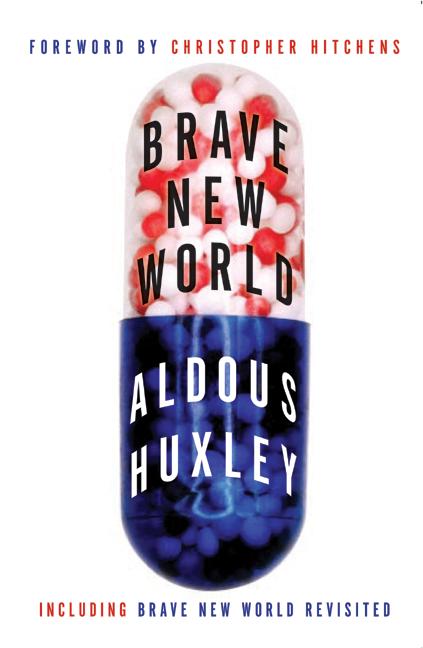
It's been a long time coming, and I have finally read Aldous Huxley's best-known novel, Brave New World. Seriously, can anyone else name another book of his they've heard of, let alone read? As a fan of dystopian and other socially relevant speculative fiction, I had to read this, a classic of the genre. While some of the glaring anachronisms (to the modern mind) are at once funny and frustrating, I did my best to set them aside and evaluate the book in-context. But even with that in mind, I found the book to be less of a novel and more of a weakly woven parody.

The novel opens with a tour of a "hatchery and conditioning center," where children are carefully manufactured and raised to fulfill their duties as defined by their assigned caste. Even though they have time to play (the type of play most often alluded to being "erotic play"), childhood in this world looks like a real drag. And immediately we know that this is going to be a very dry, detached novel. Usually these sorts of novels start out by presenting the protagonist at some point during his daily routine in this weird world. Instead, we get a boatload of exposition. Kudos to not following the formula I guess?

There are several main characters, as well. We meet Lenina first (bet you didn't get that reference right off the bat), a seemingly conventional hatchery worker. Then a bit later we see the world from Bernard Marx's perspective, an Alpha-Plus whose short stature makes him an outcast, and a very bitter one, at that. His only friend is Helmholtz, a lecturer at the university, and who apparently has too much of a good thing going on. All three of these characters become inextricably linked when Lenina, who apparently has a greater proclivity toward monogamy than her peers as well as an attraction to odd men, goes on a trip to a savage reservation with Bernard. While there, they meet a pair of white people living amongst the so-called "squalor": a woman named Linda, who looks way older than your typical 44-year-old would look even then, probably, and her son, John. That last guy is the third main character.

Linda apparently had become separated from the hatchery director while on holiday there, and she was pregnant with their son--an obscenity and an abomination in this civilization. Both of them are outcasts in the reservation, so when Bernard offers John the chance to go back to England with them, he eagerly accepts. However, things aren't so great when they return. Everyone is horrified by Linda's haggard appearance, so she spends the rest of her life on soma (the happiness drug with no side effects--unless you take too much for too long). And John, last name Savage, doesn't find the "Other Place" to be quite as nice as he'd imagined. The infinite sets of twins freaks him out, the promiscuity repulses him, and so does the indulging of "pleasant vices." The only people he can talk to are Bernard and Helmholtz--but since Bernard is petty, John connects more with Helmholtz, who is slightly more thoughtful and understanding. Lenina and John share a mutual attraction to one another, but as she abhors marriage and he, extramarital sex, John drives her away.

After the death of his mother, John incites a riot amongst the hospital workers when he discards their soma ration, and the three men are taken away and dealt with. Bernard and Helmholtz are sent away to an island somewhere, and John is encouraged to stay. However, John wants to be alone (something that civilians are conditioned against doing), and goes to hide in an abandoned lighthouse. However, because he decided to stay in Britain and not, like, go far far away like he should have, he is discovered, and people start flocking to the lighthouse to gawk at him. After a secret "feely" (movies that engage all the senses) is made about him, even more people come, and John is pushed over the edge when Lenina shows up. Enraged, he starts beating her, and the other people beat each other. In the end, he hangs himself.

To give Huxley credit, it's not like all the women are perfectly fine with this society: Lenina does fall in love with John, which other women seem mystified by. However, as it is shown with Lenina and Linda, apparently promiscuity is hard to shake, and perhaps John's undue repulsion at Lenina's advances are a result of his own social conditioning, having seen his mother sleep with a lot of men--and suffer for it. And so of course it is only the men who can defy society. This aspect of the book was a large portion of the outrage expressed when it was first published--and these people obviously missed the point. Sex was one of the distractions to make the people happy and keep them from thinking too much, and monogamy meant committing oneself to a single person--and that could bring all sorts of problems. After all, "everyone belongs to everyone else". And not more to a single person than another person.

I suppose that the blatant references to Soviet leaders, the confusion between Henry Ford and Sigmund Freud, the irony of an American Indian reservation being more civilized than civilization, and the obvious choice of Shakespeare were deliberately satirical--I certainly thought it was funny. (actually the Indian thing wasn't funny--that part's racist). But overall I didn't find the tone very satirical--ridiculous, yes, but not very funny at all. This was in part due to the fact that several chapters are devoted to a few characters merely spouting talking points at each other. In all of chapter 17, the Western Europe controller and John Savage are engaging in a debate about God and unhappiness. And since Bernard and Helmholtz just get sent to an island, the stakes were nonexistent here. Sure, John kills himself, but it was sort of his fault because he stayed in England instead of going to a place where he would be FAR FAR AWAY from people. Yes, this place is horrible because it takes away people's choices, stamps out any capacity for rational thought in the majority of the population, and demonizes nature and biology (making it way more difficult for outcasts to function in society), but, to paraphrase Mustapha Mond, what would there be to gain if they changed now? It's already too late. Everybody's happy, even the Alphas who step out of line. There is no danger.

Perhaps Huxley meant it as more of a cautionary tale, to show the world we could end up living in. Advances in genetic engineering have brought about speculation of "designer babies" becoming our future--though under the free market it would be the rich with perfected genetics and not the lower classes--and thanks to the Internet, we have more ways to distract ourselves than ever. People do have sex more often, and with more sexual partners--however, it's the ignorance of sexuality and slut-shaming that are more pressing problems regarding this topic, not promiscuity itself. More people are also less religious--but as long as they're not worshiping the almighty dollar or a political leader instead, I don't think this is a problem, either. Manipulation of the masses, however, is a problem, and I'll give Huxley credit for that one.

The novel is about as shallow as the world it depicts. Huxley has spent too much time imagining the world, and articulating what is wrong with it, rather than developing the characters struggling in this world. Thus breaking one of the golden rules of writing: show, don't tell. The book was interesting, but I couldn't be moved very much. I finished the book, but I wasn't invested in the characters or the story--though I guess shallow characters make a shallow story. The unhappiest person was John, and of course he would be unhappy, he didn't belong there!

Perhaps, though, that isn't the point. When people talk about this book they talk about the world that Huxley created, not the characters within it. And it has made me think about how happiness can never be guaranteed for everyone all the time, and a guaranteed happiness saps humanity of freedom and meaning (among other musings). A perfect world is impossible. Huxley gets points for thoughtfulness, even with a shallow story.

3 stars out of 5.