Showing posts with label books. Show all posts

Sunday, December 8, 2013

Success Somewhere Else: Five Star Billionaire by Tash Aw

We hear a lot of things about China, from its oppressive government to how it's going to take over the world (wouldn't count on that). But there is another way to understand what's happening in China, and that is to read the stories of people who actually live there. Oppressive the government may be, but it is one of the more economically prosperous countries in the Asian continent. Tash Aw's place story Five Star Billionaire accounts for a more nuanced perspective on the way life is in modern China, especially city life.

The five characters who come to Shanghai, China's largest city and the most populous city in the world, each want a chance to succeed in ways familiar to Western audiences. The Chinese economy is fully capitalist, and the protagonists' goals start out, at least, as purely material. But committing oneself to the capitalist agenda casts out the virtues of humanity that these characters, one by one, realize they have lost, perhaps irrevocably. In this entangled narrative, Aw shows us that capitalist ideology has the same effect here, to the detriment of the environment and humanity, in the most effective way possible: through small, individual stories.


The tale starts out strong, with an immersive introduction to Phoebe, one of two heroines in the book...though none of the characters can hardly described as heroic. She's an illegal immigrant but desperate to achieve materialistic and romantic success, expressed beautifully in a scene with a wealthy-looking young couple. This first chapter, which weaved in backstory with a wonderfully immersive scene, hooked me immediately.

The other characters, however, had less gripping introductions, Aw dropping the backstory almost all at once for the rest--most notably, Justin and Gary. Justin is the heir and proprietor to the massive family business of LKH Holdings, but we come in just before the moment of collapse. Gary ends up having a similar breakdown and drastic change of fortune, except he's a famous pop star, having won the genetic and marketable talent lottery, who ends up resenting his own fans and hating fame. The other female protagonist, Yinghui, is a successful businesswoman, but is feeling the stigma of being a "leftover" woman. Her introductory chapter is also excellent.

There is a fifth protagonist, who reveals his backstory slowly, recounting moments in his youth and more recent history to give us hints of his true motivations for success, remaining an ever-mysterious figure even as he enters the narratives of the other characters. And the reason why he is so successful may surprise you.

Naturally, as a lot of these novels go, the characters' lives each intertwine at one point or another. In a few cases, it's unknowingly, but we, the reader, are clued in. Seeing how these characters' lives connect is part of the fun in reading, so I won't reveal to much plot, but they all have a few things in common: they all are not native Chinese (all except Gary are from Malaysia), they all have achieved financial success (except for Phoebe, who manages to get there through deception), and they all are lacking in the personal life department, as none of them are married or have steady relationships. In the end, they all feel empty inside, as it turns out that financial success alone does not complete one's life.

The characters are also very calculated in their interactions with most of the people they meet, figuring out how they could use the other person and how the other person could use them. Often, the characters lie their way into success and out of sticky situations, and when they're finally honest with someone else, they get burned in the end. The culture of Shanghai seems to compel them to act this way, and the characters fail hard before they learn from their mistakes and move on to find true happiness.

The plot may appear cliched, but the different setting and culture gives the story a freshness that it may not have in a Western setting. Setting is important in this story, as well, and it is richly depicted in the prose description and characters' colored points of view. However, the women characters became engaged in stereotypically feminine behaviors that does not occur likewise for the male characters and I can't help but cry bias. I got tired of Phoebe's relentless pursuit of men, when I wasn't all that clear on what it was that she really wanted, and Yinghui's growing interest in dating made me sigh and roll my eyes occasionally. Other than that, however, the narrative hardly annoyed me.

Overall, this story is an engrossing portrait of the capitalist dream in Shanghai, which will chew you up and spit you out just like in pretty much every major city in the world. You may be able to save face, but only if it's not too late. Four out of five stars.

Thursday, October 17, 2013

Aimee Bender's "The Color Master": A Three-Part Review, Part 2

So, after a disappointing first part, I didn't hold much hope for the rest of the collection. But, I bought the damn book, so I kept on reading. Luckily, the second section improved in quality overall.

"The Fake Nazi" started off as a quite compelling and expertly constructed story, revolving around a man who believed he was a Nazi--even though he wasn't. Through three different people--the man himself, his brother, and a curious legal clerk--we learn more about the strange psyche of this man and the intersection of coincidence and fate. But then, when the legal clerk visits the man's brother at his apartment, she...lets him feel her up on her visit? It was another example of sexism and objectification in a story in this collection that I can't tell if it's showcasing a character's internalized mentality or the author's own.

"Lemonade" is an overall good story--Bender really got the voice and psychology of this insecure and somewhat strange teenage character down to a T. The thing was, though, that at first I thought they were 13, 14 years old--but later it is revealed that they are old enough to drive. (so, 16?) And they use cell phones--so we're talking the year at the earliest is like, 2006. (mayyybe a couple years ealier, maybe) They live in LA. And they're hanging out at a fucking mall? They did some paltry shopping there, but like, nobody goes to malls anymore if they have their fucking driver's license, except maybe to go shopping, I guess. And the voice of the narrator especially seemed so young--I guess because she's a little naive compared to the other characters? And again, the ending was kind of "meh" for me.

"Bad Return", which is another story about two young-ish female friends who are very different from each other, is much more interesting. This also has a scene between a young woman and an old man, but it doesn't get sexual, thank God: instead, it becomes a faintly magical and creepy encounter that brings the protagonist to a profound conclusion about her friend. Perhaps it's more conventional than the other stories, but I certainly enjoyed it.

The next story, a short one, "Origin Lessons," was absolutely fantastic. It captures the students' insatiable questioning and curiosity and the professor's increasing difficulty in being able to explain the origins of the universe. Though I wasn't sure how old the kids were at first, and again, with the ending, the traditionally feminine imagery, that I keep hating for some reason. But this one I liked a lot.

The last story in this section, "The Doctor and the Rabbi," also deals with big questions, asked by a very specific character. I thought it was cool the rabbi was a woman (I wasn't sure rabbis could be women), and this story is expertly crafted, intertwining big questions and personal revelations, teetering on the edge of being "profound on purpose" (a made-up term for something I often loathe in literature) but not going too far.

So this section was a great improvement. I look forward to reading the next (and final) section...maybe it just keeps getting better? Or do we turn back around to worse?

Monday, October 14, 2013

Aimee Bender's "The Color Master": A Review in Three Parts

My latest reading is Aimee Bender's recent collection of stories, The Color Master. I loved her first collection The Girl in the Inflammable Skirt and her second novel The Particular Sadness of Lemon Cake. Yet, I was apprehensive when approaching this collection. I'd not so surreptitiously read the first story "Appleless" in the bookstore before I went ahead and bought it, and didn't like it too much. (More on that later) And the collection is divided into three parts, so I'm dividing my review into three parts, one for each section.

The first part did not get off to a good start, to say the least. The first story, a three-page story called "Appleless," is an exercise in mythical and literary cliche: the vaguely defined "we" as a narrator, the objectified beautiful blonde woman, and a story that is so blantantly obvious in its attempt to try and make you think. Oh, I thought about it all right. Now, some of the imagery and description of the story is great--the "loaves" of hair, the smell and taste of apples--but it's a story that just plain doesn't make sense, and not in a good way. I probably missed something, but I'm not looking to discuss this story in a class or a book club. Quite frankly, I think the story sucked, especially for a first story--isn't it supposed to be a good one that's supposed to be first? And the funny thing is, I think this was the first story by Bender that I actually came to dislike the more I read it. Whether it's about misogyny or raping the earth, it's old hat. The packaging doesn't fool me.

Next was "The Red Ribbon," which I found interesting at first. When a woman plays out her husband's prostitution fantasy, it changes the way she looks at everything, including their relationship. Her awkward inquiry about intimacy with an intrepid saleslady was funny and poignant in its own way, but the story falls into the failing marriage cliche of storytelling. By all accounts, I liked this one better than the first, and perhaps this subject doesn't interest me, but I found elements of the deja vu variety that just bores me to tears.

When I got to the third story, "Tiger Mending," I thought, "Now we're getting somewhere!" A story about a strangely gifted seamstress as narrated by her sister as they travel to Malaysia to see what the sister's job offer was about. The voices of the two sisters are so distinct, yet they play off each other quite well, and the scenes in which they're at the tiger mansion are bizarre and spooky. But then, the story just ends, and again, it doesn't make sense in a bad way. I'm sorry, but what? They do this to themselves? So then what the fuck's the point of even doing it? Tell her to just not do it, let them die! They are not fit! Let them die out, like the pandas (sorry panda lovers). So another disappointment in the end.

"Faces" conjured up more familiar themes and situations. In fact, the main character in this story, William, exhibited similarities to the brother in Lemon Cake: he's antisocial but still manages to get by in classroom and social situations. The story wasn't that bad, and I commend Bender on giving a protagonist with a disability pov a whirl, but I found so many logic fails. William has face blindness (thank you Arrested Development! Saw it coming the minute the doc took the photos out), which for some reason is called "facial illiteracy" in the story (wut?) and made me wonder if Bender knew if this was a real thing. Now labeling it with a name people don't use is one thing, but the fact that he gives all his "friends" aka the people he hands out with the same name? Um, their voices and clothes would be different, wouldn't they? And wouldn't they call each other by their names at some point? I suppose it's funnier/quirkier/more "profound" for him to just call them all the same name, but face blindness is a real thing. People who actually have this get by by differentiating people by other identifying markers, like voices. Sure, they may forget who's who from time to time (because apparently facial recognition is important for memory, at least as far as remembering people are concerned), but they'll figure it out! Eventually he'd have to call someone by their name.

"On a Saturday Afternoon" was yet another story that started off promising, but kind of didn't do it for me by the end. It started out as the strangely told story of a woman who has become jaded and tired with dating, but then one day she asks her two male friends to enact a fantasy--a sexual fantasy--for her. I found it strange that the friends are unnamed and reduced to merely "the blond one" or something like that, though it becomes apparent that she regrets goading them into doing something that was so objectifying and demeaning, in a way. And the sex scene--which was such a big part of the story--is so awkwardly written I sped read through it the first time.

So, I didn't have high hopes for the next ten stories as I finished this part. Little did I know that I would be pleasantly surprised...

Monday, September 30, 2013

A Short Review on a Book Too Long

So, among the usual reasons for extended dry spells--busy, busy, busy--I also have not posted for a while because it took me so long to read Clash of Kings. While I enjoyed the blood and violence and horrible/awesome twists and interesting characters, the book was too damn long.

Are there abridged versions of the Game of Thrones books that I can read, which get to the meat and leave out all the pointless details about this lord or that lord who gets cut down like two pages later? (Essentially, cut out all the parts I should be skimming over?)

On a related note, I have been contemplating the TV series ever since it took me so agonizingly long to read this book. I usually don't spend a whole month on a book, unless it's something like IQ84. I'm starting to think that watching the show might take less time than reading the books at this point. Also, Sigur Ros, one of my favorite bands, will appear in the next season, so that definitely piques my interest a bit more.

To end this short review, a video from the band in question.  

(To read more detailed thoughts on Clash of Kings, read my review of the first book. My thoughts are basically the same. I am so tired of this book I do not even want to put any more thought into it than that.)


Thursday, July 18, 2013

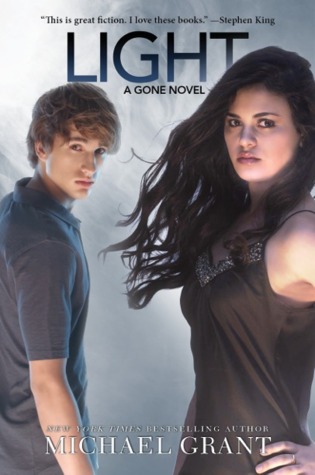
A Summer Reading Series: There's Always a "Light" at the End of the Tunnel

In three days, I read the final installment of the fast-paced and immensely disturbing Gone series. Light was decidedly faster paced than the rest of the books in the series (except perhaps for the first), so fast that I really did get swept up in the action, unaware of time's passing. It was a brisk, violent, emotional end to the series, but I responded more viscerally to the former than the latter. It seems that even though Light is full of action, death, and thematic resonance, it fell short emotionally, as if the author himself had turned off his emotional capacity to better cope with all the suffering he has caused these characters, just as many of them have done with theirs.

**SPOILERS AHEAD**

Obviously, Gaia lives, and grows, as Sam had not managed to kill her completely. And now that the FAYZ wall is transparent, the whole world can see the suffering and trauma that the kids have endured. But as sound cannot travel through the wall, misunderstandings about the goings-on in the FAYZ abound, and our core characters each consider what lies in wait for them at the end. It's not long, however, before Gaia is strong enough to unleash some bloodshed, and several characters, some named and most not, meet a swift and terrible end.

Light retains all the good stuff from the last five volumes, keeping the tone consistent: a fast-moving plot, complex characterization, and intense action. Additionally, all the loose ends get tied up real nicely, with a quick hint that maybe not everything is back to normal. But even as the story moved quickly, it is the same plot that drags on: the battle with Gaia. A couple kids get to throw some punches at her, she massacres a few more, then there is a rest. So there wasn't a whole lot of variety this time around. The plot with Petey was also grossly underutilized, as we only get precious few glimpses into his disembodied psyche before he possesses Caine, and his final battle with Gaia is laughably brief and almost comical to boot.

Interestingly enough, the last 30 or so pages, which go over the aftermath with all the main characters, was the most intriguing aspect of the emotional psychodrama that took place in this volume. The effect of their experience in the FAYZ would definitely be long-lasting, and adjusting to life in the real world would be difficult. I would almost rather have had another volume that went into a bit more detail about these kids' futures; sure, it would be epilogual, tangential to the overarching story of the FAYZ, but it is just another missed opportunity for a YA series to go in depth with the psychological effects of the trauma that the characters experienced and the cruelty of the real world when it comes to sympathizing with such trauma (see also: Hunger Games). But I applaud that Grant devoted more than 10 pages to it and treated the aftermath with deft realism.

One major weak point in the overall emotional arc came from Edilio's end. Edilio quickly became one of my favorite characters over the course of the series, and he has steadfastedly remained a "better person" than even Sam and Astrid (who basically give in to fear of death towards the middle-end), and there were some nail-biting moments when I thought he wouldn't make it to the end. But his grief for Roger, his supposed lover...I couldn't sense it the way I had with Sam and Astrid, or even Dekka's love for Brianna. Maybe Edilio is just good at holding back his emotions, but I did not get that intense fear and sadness that the other aforementioned characters in love had felt. If Grant really wanted to run with this, we should have gotten more set-up, seen Edilio and Roger interact a few more times than the few scenes we got back in Fear. In the end, I was happy for him, but still didn't buy that it was "true love" in the sense of Sam and Astrid or Dekka's love for Brianna.

Which brings me back to emotionality. This book made me gasp, tense, sigh with relief, and even feel happy for the characters towards the end. But I didn't cry. I was shocked that Brianna was killed so quickly, but I didn't feel sad. I felt sorry for everyone who was there to witness it, and the characters who cared about her, but I wasn't sad. I wasn't sad when any of them were killed. I even got angry with Sam and Caine for acting like such selfish cowards while helpless kids were being slaughtered with their powers. (Yeah, sorry Sam fans, but for a minute there I actually wanted him to die. When will a YA author have the guts to kill off the hero?) It wasn't like I didn't care about any of the characters who died. Perhaps there was just so much death, more then in any of the other volumes, I expected just about everyone to die, and not only wasn't surprised, but was desensistized to it. It stopped being shocking and more like, "Welp, now it's time for more kids to die." The killing was getting out of control.

But even through all of this, Sam gets through it all, coming out of the experience amazingly well-adjusted (if more stubborn and headstrong than before) while many others hadn't. As he's been in the thick of the action, you would think that he would leave the FAYZ just a teeny bit more scarred than he had. Ironically, in the end, the big hero of the FAYZ wasn't much of a hero, his life preserved thanks to others and his own selfish instincts, and yet retains that title for his past actions and doesn't seem to suffer a major guilt complex. (Though one would hope that Astrid would give credit where it was due regarding the end of the FAYZ) It was pretty obvious that the author was making it so that he and his closest friends would live...surprise, surprise.

So ends this thrilling ride of a series. Worth checking out, but, like the vast majority of critics say, it could've been better. 3 stars out of 5.

Tuesday, June 18, 2013

Paddy Clarke Ha Ha Ha ain't so funny

Roddy Doyle's Booker prize-winning novel isn't your typical novel, even among the literary types in which Paddy Clarke Ha Ha Ha fits so well. There's no real overarching plot tying all the episodic occurrences together, rather, a thin thread of feeling and a sense of security that changes over time--a length of time that is imprecise and imperceptible, as we are given only a vague sense of the order of events that occur in the novel. It is also all told from a 10-year-old boy's perspective, who learns a lot but still is very ignorant about much of the world. This structure may be off-putting to a lot of people, but if you take your time with this subtly pensive tale, you may find the story absorbing and enjoyable.

The story takes place in 1968 Barrytown, Ireland, a very specific time and a very specific place, but Doyle presents the context--even in the eyes of a ten-year-old boy--quite adeptly, so one gets a fairly accurate impression of the setting, and even the prevailing attitudes of the time. The titular protagonist gets into fights, picks on his little brother, participates in gross and masochistic dares, steals from certain shops, and looks down upon the boys who live in the newly constructed corporation housing. Like all his friends do. But slowly, over the course of the novel, the boy changes, and no longer fits in with his boorish peers. Coincidentally, or not so coincidentally, his parents' fights come to a breaking point and his father leaves the household for good, and he is drawn to one of the more aloof Corporation boys, Charles Leavy. The change is not much, but profound.

The story is strongest with its authenticity in detail and in Irish manners of speech, transporting to you to this very distinct setting. Roddy Doyle is nothing if not authentically Irish. That said, you'll need to put your context clue sleuthing skills to the test at times if you're not familiar with a lot of Irish-isms, or else have Google handy.

The structure of the novel is a major weak point, however, as each (mostly short) section is individually compelling, and not so much builds up a collectively compelling read. Though the book is under 300 pages, it took me longer than usual for a book of its length to read, largely because I wasn't dying to read more, only reading a few sections in a sitting and satisfied with that. It could be a purposeful device, allowing for deeper ponderation and a more true-to-life look at Irish boyhood, but a few sections likely could have been cut out without impacting the overall story very much. But to each their own.

In sum, Paddy Clarke Ha Ha Ha is an engaging, sometimes funny, and occasionally shocking portrait of one Irish boy's life at the age of ten. 3.5 stars out of 5.

Monday, May 20, 2013

"Fear" Keeps the Suspense Going

Five books in, Fear retains all the great qualities of the previous four books, even as the red shirt, climatic battle with Drake and death of some other baddie starts feeling repetitive. Clocking in at over 500 pages, this is one of the longest books in the series by far, and Grant maintains the mounting suspense, surprising (and shocking) twists, and realistic character development that has made the series so compelling. However, beneath all the action, horror, and suspense, one can sense that the author was running out of steam, making this book a little more uneven than the first few.

I can never figure out who the kids on the cover are supposed to be...
The looming crisis in this volume is the impending darkness of the sphere, stemming from the gaiaphage and blackening the barrier, eventually obliterating all sky light in the FAYZ. Astrid has exiled herself from the new communities as a form of punishment for her desperate act of the previous book--and she is easily one of the best-written characters in this volume. Sam and his crew have set up a new community at the lake they had found, and enjoyed four months of relative prosperity. Things in Perdido Beach are not as peaceful, however, as one of Quinn's fishermen is sentenced to being tortured by the visions of Penny, who herself begins to plot a coup against "King Caine" when he is pressured by Quinn to get rid of her. Meanwhile, Drake is on a mission for his master: to bring Diana, and her baby, to its lair, and Petey has become a disembodied spirit with the ability to manipulate living things--often with horrific results.

Things go south fast in this book, but not before a good deal of time is taken to catch up the reader on the past four months and spend some time with each set of characters, which slows down the momentum of the book. It's a lot more quiet and pensive in the beginning, which ain't a bad thing. We also get a glimpse of what has happened in the outside world after all this time--and a plot to destroy the sphere forever. The greatest strength remains to be the complex character development, strongly evidenced in this volumes by Astrid, Dekka, Sam, and Brianna--with Quinn and Caine revealing new sides of themselves, as well. Astrid's was by far the most profound, as she had lost her faith and accepts her desire for Sam, rather than try to push it away. We see Dekka and Brianna be hopelessly vulnerable--and Orc, too, come to think of it.

The ending--which was quite cool and surprising--opens up the door for further interesting character conflict, as the world of FAYZ is now open for the adults to see--without the benefit of warm embraces and lengthy explanations. (And imagine the pressure of being seen while going about your business running a run-down world!) For that reason, and not the final demise of the gaiaphage, I am excited to see what happens in the final volume.

In spite of its enduring strengths, Fear had many weaknesses, mainly figuring around the mutant baby of Diana's that the gaiaphage possesses. It was one thing to have the "bad girl" endure a pregnancy, but once it accelerates and the baby is born, I couldn't help but giggle a little bit because it's so convenient that the gaiaphage can accelerate growth, I find the precocious monster baby trope a little silly (as well as precocious babies in general), and I am immature. Even with Penny's quick descent into madness and evil and Cigar's beady new eyes, I found the baby gaiaphage to be the silliest turn that the Gone series has taken thus far.

I found other aspects problematic, as well. While the depiction of violence and madness has usually been handled tactfully in the series, the introduction of Penny as a "pure evil" character as bad as Drake, and Cigar's descent into madness as a result of her own, paints a problematic picture of both. While in a world where survival is prime, the mad and the violent are most often shunned or condemned to death, a sad state of affairs, I still find it terrible that nobody has tried to help them. Mad people need help, not to be euthanized or brutally killed. Another small issue I had was the abrupt reveal of Edilio's relationship with Artful Roger. Though Sam calls him "gay," I doubt that Edilio should have accepted the label so blatantly. Didn't he have a little crush on Lana at first? I would say he's at least bisexual. He just happens to like this guy.

All told, however,  Fear remains a quality installment to the series, with a cliffhanging finish that leaves you beyond excited for the next volume. I give it 3 stars out of 5.

Wednesday, April 24, 2013

Recurring Themes and More of the Same

George Saunders released a new collection of short stories this year, Tenth of December. But that is not the collection I read this past week or so. Instead, it was his first collection, Civil War Land in Bad Decline. I had read the title story back when I was an undergrad, loved it, and had been meaning to pick up the entire collection for some time. Meanwhile, I had read The Brief and Frightening Reign of Phil at some point, which was a very quick read and I don't have the faintest memory of what it was about. This collection left a similar impression on me: breezy, funny, smart at times, but a bit behind the times. (Yes, even in the '90s...hell, especially in the '90s)

Civil War Land in Bad Decline is a collection of six satirical short stories and one novella, "Bounty." Each story is narrated in the first person, relating a skewed, disparate point of view in the face of the mounting madness. The heart of the conflict in most of these stories lies in the workplace, mainly between a disgruntled, inept employee and the boss. The title story outlines the quick decline of a historical theme park and the increasingly desperate attempts on the narrator's part to put things right. In "The 400-Pound CEO," the titular character works at an inhumane "humane" raccoon control business, and finds himself in hot water when he accidentally kills his abusive boss. "Bounty" starts out in a similar vein, but broadens into a dystopic satire featuring the ugly and the misfits.


The first writer that comes to mind in terms of influences is Kurt Vonnegut, who also wrote futuristic, satirical stories and outlandish characters and situations with quick-clipped pacing. This was his first collection, and that is allegedly the collection where an author's influences are most likely to show, but sometimes it seemed like he was trying to be like Kurt Vonnegut. Like Vonnegut, Saunders hardly takes part in the literary trappings of detailed description and rumination, which creates a fuzzy, liquid world in which the characters float--perhaps fitting, because the characters are downright cartoonish at times. This is most detrimental in his more futuristic stories, such as the novella "Bounty," which is  one of the better stories in the collection, handing over an almost O. Henry-esque ending. There's nothing wrong with the reader's imagination filling the blanks, and one almost inevitably envisions a penciled watercolor landscape and exaggerated silhouettes. If that's the effect Saunders wanted, and I just think it might be, then good on him.

Saunders' satire remains to be right on the money. Even though the vision of virtual reality depicted in "Offloading for Mrs. Schwartz" is very much the '90s-inspired heavy-headset kind, the idea that we may live within our own virtual fantasies is not far off from becoming reality (thanks, Google Glass). And all his commentary on the growing specter of corporate power and influence remain as salient as ever. But his heroes all seem to be relics of Vonnegut's era, with even less gumption: bumbling, disfigured, or nerdy men--though one story features a female protagonist--and most of them meet grim endings. With this comes rather old-fashioned ideas about women and people of color--if they are mentioned at all. I kept forgetting that these stories were supposed to take place in the future.

The stories were very similar in other ways. Each story features an odd workplace--theme parks appear no less than three times--and the protagonist is struggling to make ends meet and kiss up to the boss. Not all stories wound up being about the same thing--the main standout story is "Isabelle," about human kindness and compassion that rises out of chaos and ruin, and is almost kind of sweet in the end. But the themes can get tired--I mean, there are ghosts in two of them. Two!

This is not to say that Saunders isn't a skillful writer. The fast pacing of the stories are easily digestible in short periods of time, and rather expertly constructed in terms of thematic and satirical content. They are also quite enjoyable to read, and not painful exercises in 20th century bombast and bigotry. But I have seen it all before, and done better. Saunders may be different from the other literary stars of the last couple of decades, but he is nothing new. Three stars out of five. Oppression score: 4, as he does root for the little guy.

Wednesday, March 27, 2013

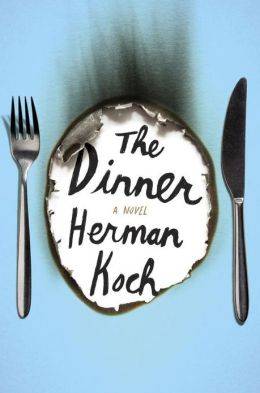
The Longest Dinner Ever

Recently I read another book that's been hitting the hardcover bestseller charts, Herman Koch's international hit The Dinner. Presented as a Dutch Gone Girl (which maybe I should read now), the story takes place over the course of a single evening between Paul Lohman, his brother Serge, and their wives--with plenty of flashbacks throughout to full in the reader on the backstory. The story starts out wonderfully cryptic and tense, but once we get to the main course, it loses a bit of steam, kicking up again for the payoff in "Digestif."

The two couples have met, primarily, to discuss their biological sons and how best to deal with what they have done--which was quite a deplorable act, even if the end result was an accident. A lot is on the line, as Serge is running for prime minister and his brother suffers what appears at first to be a mean temper. As the story and the dinner moves forward, Paul reveals some shady motivations and dark past, almost each chapter ending upon a cliff and pressing you to go forward. It's more of a meditative tale than an action-packed one, with most of the plot having happened well before this dinner is taking place.

Each character in the story is devious and self-centered to a degree, and each member of the dinner party is looking out for themselves and/or their immediate families, to hell with anyone else. All Serge cares about is preserving his reputation, no matter how much he says that he only cares about his son's future. On the other hand, his wife, Babette, wants him to keep quiet about the incident and stay in the running for Prime Minister to protect their son. Claire's final desperate act at the end of the evening was a last-ditch effort to protect her son and Paul from prison and public scrutiny. Even Paul, our protagonist, reveals an unnamed mental illness that makes him prone to rage and see the worst in everyone--especially anyone who is not his wife or son. None seem to think that they boys should confess and suffer the consequences of their actions because what they did was wrong. In the end, this is what the story is about--the lengths at which people will go to protect themselves and their families (and especially their offspring), no matter the consequences otherwise.

But the plot bogs itself down in backstory during the main course--rather than having such juicy details be revealed through brief scenes that Paul reckons back to at some point in their vacuous diner conversation, we are treated to an uninterrupted succession, which makes it easy to forget at what point in the dinner we're at. By the time we return to the dinner as it's happening, thee story has lost a lot of momentum, failing to pick it up again even with a last-minute twist. After all that buildup I had expected a flashier finish, but considering the fact that they were out to protect their family from scandal, and succeeded, it is not much of a surprise. Another frustrating flaw was Paul's intentionally vague description of his and Claire's illnesses--one can only assume that he is talking about real illnesses, though such vagueness almost always leaves me suspicious of its accuracy.

On the whole, The Dinner is a satisfying read, and an interesting character study, even if it seems like the evening went on for much too long. I give it 3.5 out of 5 stars. Oppression score: 3, for Paul's contrarian and quite prejudiced views on such matters as those of the homeless. On the other hand, Paul is kind of a terrible person, like a lot of them, so it's largely harmless.

Thursday, February 21, 2013

Corn Maidens and Demon Brothers

Joyce Carol Oates is, at the very least, an unsettling writer. I haven't read a lot of her work, but the one novel of hers that I have read, Zombie, made my skin crawl all throughout. This more recent collection of hers maintains that vein of creepiness that seems to have become her trademark. That she is revered in literary circles and not relegated to the genre ghetto is almost incredible. In her stories, though, the idea of supernatural forces influencing the characters is suggestive at best, or nonexistent. The horrors that Oates covers in this collection are entirely the result of the human mind and the society that has failed it.

The title story is unquestionably my favorite, though it is more accurately a novella than a short story. In this tale, a blonde girl is kidnapped by a sociopathic teenager who plants false evidence to implicate the school's computer consultant in her disappearance. While the missing girl's mother frets with worry and regret, the teacher bubbles with anger and resentment, the girl is drugged and kept hidden in a room in the sociopath's mansion, and prepared for a ritual inspired by Native American "corn maiden" tales, twisted in the sociopath's mind. We get a full picture of this story that the characters each grasp only a fragment of, seeing the points of view of all directly involved. Judith's is obviously the most twisted perspective, with her scenes narrated in a manic cadence. And though the mother and teacher's victimization and frustration are understandable and sympathetic, Oates lays bare the very real effects of rumor and prejudices that permeate not only the evening news, but the actors involved. Though the circumstances of the girl's disappearance are highly unusual, Oates presents the harrowing event in a realistic and haunting manner.

Oates' status as a literary writer is quite obvious in the way she richly evokes scenes, weaving into them the characters' emotional state and point of view, following the classic "show don't tell" rule of writing. The final story, "A Hole in the Head," serves as a perfect example, richly detailing the hastened but thorough process of covering up an accidental murder. "Beersheba" also does this quite well, as Oates slowly reveals the details and backstory as we follow the protagonist through his (likely) last day alive. No matter how harrowing or horrifying the experience, we can clearly envision these scenes as if we were there. Oates' stories also debunk the myth that another writing adage, "write what you know," means that you should only write about what you have personally experienced. Because surely Oates has not murdered or kidnapped anyone. With the right amount of research, you can write about anything.

"Unsettling" is a flexible term. In "Nobody Knows My Name," a story with suggested supernatural elements, a large cat kills the protagonist's baby sibling, almost in response to her hatred and jealousy. Supernatural forces are the only explanation that I can think of to explain this bizarre occurrence, because it's just so strange. In a way, though, it doesn't matter how the baby died, for Jessica would have implicated herself in it. "Helping Hands" I also did not enjoy so much, bringing in an out-of-left-field ending. In this story, a recently widowed woman reaches out to an employee and war vet of the titular charity/thrift store. Perhaps she was so stricken with grief that she could not see the "signs,' and perhaps sometimes people whom you'd expect to  be shady are shady, but I thought things escalated much too quickly, in any case.

The other two stories in the collection were very similar, and less nightmarish than the rest. Both involve twin brothers: one handsome and successful yet sleazy, and the other less successful and well-liked, but intelligent and kind. Over the years, the brothers become estranged, but in the end, they reconcile with each other somehow. And yet they are not the same story: the first, "Fossil Figures," the weaker brother was born with birth defects, spending his life as an artistic recluse, and the stronger brother is ashamed of him. However, when the stronger brother falls from grace, he moves back home with his weaker brother and they grow old and die together. It's kind of sweet, really. In "Death Cup", the successful brother is a cad and a con, while the other is merely an introvert. This story is told from the introverted brother's point of view, and we can understand how much he despises his brother, and how much he believes his brother despises him. When the caddish brother returns to the family estate in the wake of their uncle's death, the introverted brother finds himself incapable of killing him, as much as he fantasizes about his death--always the better man even against this will. But, riding together in their uncle's Rolls Royce, just in time to be killed in a car accident, he finds that perhaps there is something to be said of his brother's life after all.

Though not all these tales are nightmares per se (see above), each story stands to shock or creep you out in some way, and you might find yourself sympathizing with characters you may not have sympathized with otherwise. These tales are authentic Oates tales, stories that could only have come from her enigmatic mind, so any fan of hers is strongly recommended to read  this collection. My rating: four out of five stars.

Tuesday, January 8, 2013

Grapes of Wrath: Greatest American Novel...until the End

Along with my newfound Doctor Who obsession, I have also been taking my sweet time reading John Steinbeck's greatest novel, The Grapes of Wrath, which also may be the greatest American novel to date. I should have read it ages ago, and as I got started with it, I came to agree with the critics who so highly praised this book...

...until it got to the ending.

The Grapes of Wrath, though it takes place during the worst of the Great Depression, where things were much worse, as a greater proportion of the population was starving or near-starving--still resonates strongly with today's circumstances. The novel, aside from several intermittent chapters that examine the times holistically, follows the Joad family as they reunite (when Tom returns home from jail) only to slowly be torn apart as they travel to California in search of work. Each character has their own epiphany, with only Tom, Rose of Sharon, and their parents holding onto what little hope they have left in the end.

Steinbeck's interludes were poetic and resonant, touching on themes and changes that were both specific to the time and universal: the development of technology, the displacement of poor farmers, the economic disparity, big business' takeover and pushing over of the little guy, the struggle to find work and financial stability. The story could have easily been a dystopian, post-apocalyptic novel had it been any other setting, with the struggling masses, selfish masters, and rare little pockets of freedom. The characters speak in thick accented Midwestern English, put it doesn't make them seem ignorant; they're just expressing their feelings and thoughts in their own way. Sometimes what they say is even profound, characteristically and thematically.

And each character goes through his or her own transformation over the course of the novel. Tom, previously ignorant of the rampant injustice, realizes that he can't take all of this lying down, and leaves the family to fight on for equality and justice. Noah would prefer to live alone in the wilderness. Al realizes he would rather have a career as an auto mechanic than work on farms all of his life. This novel was crafted to perfection--or as perfect as Steinbeck could make a novel.

Some things are obviously dated, however: throughout the novel (moreso in the beginning), objects are often referred to as "she" rather than "it," a very sexist pronoun assignment, and several times the characters try to run over animals ON PURPOSE while they're driving their car--an idea that is completely abhorrent and that I had never even dreamed of before. Then, there is a scene from their time in the government camp in which Al rapes a girl he's met in secret--but of course is not characterized as such, and Al is supposed to be a sympathetic character.

Now, I could largely forgive the characters' lack of respect for animal and women's rights, due to the date of the text and the ignorance and struggle of these impoverished characters, and the prose, characterization, and thematic resonance are so amazingly done. But when I got to the final pages of the novel, when the handful of Joads left abandon their makeshift boxcar home to the floods and take shelter in a barn, I was left scratching my head. In the barn, there is a young boy and a starving man who is near death. Then Rosaharn, clothes soaking wet, snuggles up next to the dying man naked as if to comfort him, then looks upwards with a "mysterious smile" on her face.

Seriously. That's how it ends.

I can't figure whether to interpret the ending as good or bad. Is it good because they will still be kind to those who are even less fortunate than they are? Or is it bad because Rosaharn is acting like a slut, a "comfort woman"? Or bad because they're all just gonna starve anyway, and she's smiling because she's insane from illness? I suppose it's whatever you interpret it to be, but it seemed to be out-of-place with all the other thematically resonant scenes in the novel, and the ending is one that makes an impression.*

Still, this novel is one of America's finest. Our writers don't always make sense. 4 out of 5 stars. Oppression score: 4 (though I think most of it would be obvious to 21st-century readers, anyway). Highly recommended to people who would like to write politically-charged, controversial, or other works featuring people who speak a different dialect.

*Okay, so I did some cheatish research, and it turns out to be a reference of to the painting Roman Charity, where a woman breastfeeds her ailing father back to health. So it is, more likely, kindness that she is expressing. Excuse me for growing up so grossly uncultured. Still, it's an odd scene--even after knowing the reference.

Friday, November 2, 2012

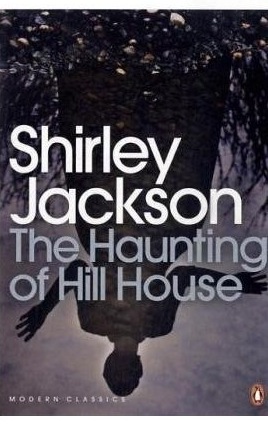
Shirley Jackson's "The Haunting of Hill House": Not as Haunting as You'd Think

Just in time for Halloween, (even if this post is a bit late) I finally finished Shirley Jackson's ghost story The Haunting of Hill House, a critically acclaimed horror novel and said by Stephen King to be one of he best of the 20th century.

Obviously, I missed something.

The novel starts out beautifully, with an amazing opening paragraph that sets up a spooky supernatural force that the characters--Dr. Montague, who engineered the experiment; Luke, the future heir of Hill House; Theodora, a lively artist, and Eleanor--will encounter. But early on the story shifts focus on Eleanor, the lonely, socially awkward young woman, which the House ultimately possesses, and spends a lot of time on her inner thoughts and feelings. These feelings are the equivalent of an insecure sixteen-year-old girl's, but portrayed in a painfully realistic manner. Psychologically, I can understand why Eleanor becomes attached to Hill House and the people in it--and the feelings that make her vulnerable to the spirits within it--but it did not scare me, or hardly even creep me out. Too much time is spent on setting this up, and even once the House starts singling Eleanor out I am not that afraid for her.

Perhaps my generation is desensitized to tales of terror, as we have decades of scary movies and Stephen King novels to have scared us out of our skins, and what was scary to people in the 1950s is probably not the same as what is scary now. Natural disasters? Scary. Mysterious diseases? Scary. Human enslavement and/or oblivion? Scary, but not in a horror-movie way. Stalkers? Scary. Being possessed by spirits? Not so much to godless heathens such as myself. Eleanor barely had a mind of her own to begin with, so there's not much fear of mind-control latent in the story, either.

I suppose that if I were in their situation, I would be scared, too, but I'm not, and in spite of the beautiful prose, it just didn't terrify me in the way it should have. That, then perhaps, is a real flaw, for though I found the characters engaging and interesting--especially Eleanor, as she was much more acutely aware of what was going on than the others--I couldn't identify with them enough to feel their fear. Was I just not reading properly? Did it just take too long to get to that point? Or, perhaps, I just found the "haunting" to be thoroughly below my expectations of acclaimed horror/terror.

The story left me with a lot of questions, for sure. Couldn't Mr. Montague see that she was in fact possessed and not merely being silly? And the spirits made her crash her car so she couldn't leave? What would even be the point of possessing anyone, let alone the most vulnerable of the bunch, in the first place?

I also understand that, like in her over-anthologized short story "The Lottery," the fact that it isn't explained makes the phenomenon that much scarier, but it frustrated me more than anything. Pretty much all that happens in the "haunting," is doors and windows closing on their own, writing written in blood (?) on the wall, unknown beings banging on doors, and Eleanor getting some weird ideas in her mind. Not that ghosts would be able to outright murder anybody, anyway, but I guess it just wasn't that scary to me.

I was so not into the story that it took me almost a month to read 250 pages of the book. For perspective, it took me about that long to read (albeit rushed) Infinite Jest, which is like 4 times as long. Perhaps it's because I'm just not that into the horror genre, especially when it comes to supernatural occurrences. The story really would have been more interesting if Eleanor and Theodora were secret lesbian lovers--which, in my opinion, was heavily implied in parts of the book--and the House was uber-conservative and didn't like that at all. In fact, I'm pretty sure the spinster sister who used to own Hill House took in that girl as a lover, as well.

So, it's an okay book, just not if you're looking for a scare. 2.5 stars out of 5.

Wednesday, October 10, 2012

A Friend of the Earth is a Friend of Mine--Mostly

TC Boyle's eighth novel, A Friend of the Earth, was released more than a decade ago, at a time when the environmentalist movement was gathering some strength. Recycling programs were becoming mainstream, people cared about the rain forests, and there was a push for greener energy. Capitalists were on the brink of developing "green" products, Whole Foods was rapidly expanding, "organic" was on the rise to become a buzzword and another entry into the free-market lexicon. But for all the progress made since the turn of the century, environmental concerns have taken a back seat to the economy, jobs, and wars overseas. Boyle could see that environmentalists were an extremely vocal but small segment of the American population, and makes the rather grim statement that people will not care so long as they are comfortable--with a twisted, ironic grin.

A Friend of the Earth follows a convicted eco-criminal Tyrone Tierwater across two segments of time: that of the year 2025-26, when the environment in the American Southwest, at least, has rapidly degenerated to deadly monsoons in the winter, and dry desert heat in the summer, and the years 1989-1997, when he was periodically engaged in extreme eco-actions and spending time in jail for them. In both storylines we get a sense of what he was like before and between these periods, and learn a little of the tragic fate of his only daughter, who decided to follow the extremist path.

While the story was interesting enough to keep me reading, I wasn't all on board. The escalation of Ty's grievous actions from mere civil disobedience to assault and kidnapping (of his own daughter) was more mortifying than hilarious, and the grumpy-old-man schtick got on my nerves from time to time. Particularly in the beginning, when his ex-wife Andrea and former friend of his daughter April Wind seem to work against him, to dredge up the past he no loner wants to talk about. I can understand his resentment, I suppose, as it seems to him that all they had done was for nothing, but he seemed to hate April for no good reason--and described her in some pretty racist ways. I know that he is the narrator and therefore his own prejudices that I won't like--but there are ways to do it better. (Exhibit A, always and forever: Lolita) He also made some sweeping generalizations about women that ticked me off--and no, they were not funny, not funny at all. The 2025 storyline improved when April leaves and Ty ends up appreciating his wife and his life a lot more.

The story is supposed to be a dark comedy--and I can certainly attest that there is a grim, farcical vibe throughout the whole story. From Ty being the most famous yet the most pathetic eco-terrorist I have ever heard of, to the enduring willful ignorance of the population in spite of disastrous storms, to the mauling of a pop star by a lion, darkly comic events happen one after another. But for some reason it is either just very difficult for me to do more than a crack a smile at a funny occurrence in a novel, or this book was not very funny at all. Absurd, yes, but not laugh-out-loud hilarious.

A Friend of the Earth is a well-written novel, with plenty of instances with beautiful language and thematic moments, and poses several interesting ideas, but Kurt Vonnegut this is not. Honestly, I think it would have been better as a movie: the visuals would be funnier, and it would get more to the point. Not to mention that the narrative voice and style didn't give us something new--at least not to someone already all-too-familiar with the challenges of the environmentalist movement and old-white-guy perspectives. I give it a 3 out of 5. The oppression score of 3, as well, because there must be worse material out there--and I don't think this is the TC Boyle work that people will be reading in 2025.

Oh, and will there be a perpetual El Nino, depleted Social Security, nil biodiversity, and too many old people? It doesn't look like we'll have all that in 2025, but this year's been a doozy so far, and there's still 13 years to go. Fact can be stranger than fiction.

Sunday, September 30, 2012

"Exodus": How to Write a Decent Feminist Apocalyptic YA

Finishing off my YA kick (going back to adult novels for a while), the critically acclaimed Exodus by Scottish writer Julie Bertagna. It doesn't have the breezy pacing of the Gone books--I would call it more "rushed"--but the story is as captivating and exciting.

Exodus has a very different feel, reading more like a mythical fantasy, with mentions of legends and destiny recurring throughout the story. But this is not a fantasy: the novel takes place in 2100, and great scientific advancements had been made well before the protagonist's time; even the elders' world was very different from ours in their youth. Instead, culture and technological progress has regressed in the wake of the encroaching seas--at least on the islands.

The apocalyptic scenario that Exodus explores is the rising seas as a result of global warming, taken to its extreme conclusion: by 2100, the seas have risen to such a height that most of the earth's land mass has been swallowed up, leaving small islands in the mountains and highlands. The people of Earth dealt with this problem by constructing sky-cities, but once they were built the rest of world was shut out.

The novel opens on Wing, the island home of our protagonist, Mara, where these cities are a mere rumor. But her explorations on her cyber wizz (a high-tech instrument that allows access to the weave, a highly advanced version of the Web) leads her to find evidence of these places, aided by a mysterious fox character. As the seas surge inland, Mara convinces her people to leave the island and try to get to the New World cities. But it's not all smooth sailing: the boats are separated right from the cast-off, and a great wall separates them from the city. They're forced to weigh anchor at a refugee camp, where conditions are squalid, and one of her friends dies from a sicknesss she contracted from eating a diseased fish (the water, of course, is filthy). That is the last straw for Mara--she decides to get through the wall and somehow enter the city. With the help of a wild child (called urchins, ratkins, or ratbashers) she makes it to the Netherworld, the islands beneath the City, and lives with the Treenester tribe for a time. While she is figuring out a way to break into the City, her friends are captured by the police, and she finally breaks in to rescue them and save her people.

There's a lot more to the story than can be explained in a brief synopsis, containing mounting tension and conflict, superb setting descriptions, and a cast of interesting characters. Exodus explores apocalyptic themes with deftness, depth, and honesty: the frailty of life, death, self-preservation instinct, and the relentless drive to do what's right. Mara is a likable but flawed character, determined to save others but unsure of herself every step of the way. She makes mistakes, and even kills a man in a fit of panic, regretting them immediately. Few other characters, however, get as much development or depth as she does, as many of them are only around for a few chapters or so, before getting separated from Mara in some way--except perhaps for Candleriggs and the Fox.

The different worlds of the refugee camp, the Netherworld, and the city of New Mungo are greatly distinguished, resembling the realms of our current world. Those residing in prosperous bubbles are often oblivious to the suffering of lesser people, no matter how close they are. The story also does a good job of bringing up such relevant themes without being too obvious or preachy about it: especially when one's story is inspired by the absurdly politically charged environmental issues.

Monday, August 27, 2012

Introducing a New Rating Rubric!

Before I post my next review, I'd like to take some time to explain a second dimension with which I will be rating books, movies, and the like. In case you haven't noticed by now, I'm pretty lefty, and I usually take a paragraph or two to point out any problematic content in the story in question. So, why not build upon that and add a handy rating system to gauge the severity of the oppressive content?

As my overall rating is based on five, and we all love multiples of five, this "Oppression Scale" will be based on 10. 1 means little to no oppressive content (which will be few, I'm sure) and a 10 will be OMG RACIST SEXIST CLASSIST HOMOPHOBIC BULLSHIT! Most likely, a "good" book will have a low oppression score, and a "bad" book will have a high oppression score. I predict that many will score around 3-7. Now, this score is obviously entirely subjective, as different people will be bothered by different content to varying degrees. And no, cliche's will not be counted--unless they're racist cliche's.

Let's take an example: The Hunger Games (book). It features a strong female character, a diversity of races (shown in a good light), and is critical of violence and reality TV. However, I don't think Collins goes far enough in portraying the horror of forced violence, and is inconsistent in Katniss's reactions to violence and death. Overall, these are pretty weak criticisms, so I'll rate it a 2. I don't think we need to be too concerned about this book.

As for an example on the other end of the spectrum: Fifty Shades of Grey. There is nothing redeemable about this book. Christian and Ana's relationship is abusive, yet the author tries to make it seem like an ideal romance. And given that so many women seem to think that this is OK, that makes it even worse. I haven't actually read the whole thing myself--I credit Jennfer Armintrout and her wonderful recaps for cluing me in on the details. And since I haven't read the whole thing, I'll just give it a 9: highly oppressive.

So, that's how it works! Look for it in coming reviews!

Tuesday, April 24, 2012

The Road by Cormac McCarthy

I recently took up a new writing project (shh, it's a secret--at least as long as I'm still working on a first draft). Let's just say it deals with a certain (and only somewhat improbable--call it a "what-if") post-apocalyptic scenario. To help me along with this, I wanted to read some stories relating to this concept. One was The Road, a Pulitzer Prize-winning apocalyptic novel (and apparent Oprah's Book Club selection), where the future of not just civilization but life in general is bleak.

The Road follows a man and his son as they wander their way south, where they'd more easily survive the winter. It's unclear how long they have been on this journey, nor how old the boy and his father are. While the circumstances of what brought the world into a state of worthlessness remain unexplained (ash covers everything, all plants and animals are dead), it is clear that the chances of survival at this point are slim, with no natural plants coming forth and the canned/preserved goods slim pickings. Their journey is grimmer at some times (such as when they find a charred baby) and less grim at others (such as when they find the untouched underground bunker). While the story ends on a somewhat hopeful note, it is more for the world itself to be able to begin anew, not so much for mankind's survival.

The Road, much like many other post-apocalyptic novels, paints a grim picture of humanity's longevity. At this point it's pretty much every man for himself, and the man gets into a few skirmishes while on the journey. The man speaks of "the good guys" and "bad guys," though he's immediately suspicious of any sign of people. Everything is covered in ash, alluding to a possible nuclear Armageddon or perhaps the eruption of the supervolcano in Yellowstone Park. Of course, it matters not how the world came to be this way--least of all to the survivors who cling desperately on to life. The Road is more of a story of a man and his boy, facing the absolute bleakest circumstances, and the struggle to endure in the face of hopelessness. The imagery mirrors this attitude, with everything being totally gray and colorless, and buildings in various states of disrepair, the man and son disheveled and starved. In a way, it's hard to believe that anyone survived this long, given the cold and rain and lack of food and fire. Many of the scenes are powerful and at times even moving, and you definitely feel sorry for the boy, who will never know the colorful, vibrant world his father knew. I wouldn't say it made me cry, but it filled me with sadness and doubt about the purpose of our own existence. (Let me tell ya, this is not a feel-good read)

One thing that got me, though, was the representation of women--the few glimpses we get of the man's wife were among the powerful moments (the scene where she tries to convince him to join her in committing suicide is wrenching)--but the few women they come across are often described as pregnant. While this is not entirely out of the realm of possibility, what with a lack of access to birth control, boredom, and likely horny/rapacious men--the man and boy were starving. And one group of people ate (or tried to eat) a baby. So I'm guessing the other people they hide from as they pass are also starving. And something happens to women when they're starving, and the medical term is amenorrhea: they stop having their periods since their bodies are smart enough to know when they can't support a fetus. Now, I don't know if all women who are starving get this condition (and certainly not how starved you have to be to stop getting your period), but it happens, and it's not unreasonable. It's also likely that even if these women could get pregnant, few babies would actually be born, since due to a lack of adequate nutrition for even one being, most would probably miscarry early on. So, yeah, while women would more likely to be abused by men in this situation--especially the "bad guys" (which the man uses as code for cannibals)--would they actually be able to bear children? Definitely not healthy ones, if any at all. But would I think a male writer like Cormac McCarthy concerned himself with details like this? Nope. *rant over*

While the world was so cold and lifeless I had trouble believing that people would be able to last even this long, it is a powerful story of compassion and the persistence of the survival instinct. It is up to the reader to wonder whether or not humanity's survival will endure, and whether it's a good thing or a bad thing. It's a novel that makes you think, even if most of it is not so happy. 4 out of 5 stars.

Monday, April 16, 2012

Lydia Davis is Awesome

As a writer, anyway. I haven't met her in person, so maybe she's not super-awesome. After reading that lug 1Q84 I definitely wanted to follow up with some lighter reading, but with my copies of the Hunger Games trilogy back at my parents' house, and a collection of Lydia Davis short stories on my shelf, I decided to read me some short stories. And a lot of them were short: like, really short. Like, one sentence. So I couldn't really quote them in case I get chased down for reprinting without permission. At least in this  particular collection, Varieties of Disturbance.

Aw, fuck it. Here's one of her miniscule gems in its entirety:"Collaboration With a Fly"

"I put that word on the page,
but he added the apostrophe."

The collection contains 57 stories, most of them really, really short. The topics range from the ritual of TV watching, explaining sex to children, caterpillars, babies, and the relationships between friends. Sure, sounds banal, but the stories aren't your typical stories: most of the characters are not named, their focus is somewhat single-minded (on the topic at hand), and there is hardly any scene or dialogue (if any, just one).  Some, like the one above, even have line breaks, like poems. Davis certainly blends the two in cool ways: and not just as punchlines.

Some of them go on for several pages, though, resembling more typical stories, though not quite. "We Miss You" is a lengthy "analysis" of letters written in a fourth-grade class sometime in the fifties or sixties, written to a classmate who was in the hospital. The narrator picks apart these grammar-school exercises in formal writing quite thoroughly, noting the specific phrases and instances of complex sentence structure in each of the letters. Another story, which is much longer, "Helen and Vi," is a report of three women who have lived to be quite old--and the third, Hope, who defies the conventional notions of what it takes to stay healthy and live long, is mentioned peripherally.

Some of the stories are so abstract, terse, and just plain short, I question whether Davis even edited some of these stories, and just submitted them after jotting them down thanks to some inspired train of thought. It certainly puts the idea that writers are supposed to slave and suffer over their drafts into question: sure, you can agonize over perfecting a single sentence, but how much agonizing can you do when that's all the story is? Of course, I don't really know if Davis slaved over her writing or not.

The shortness of many of her short stories/prose-poems also enable re-readability: something that busy poeple such as myself do not really have time to waste with. This increased my enjoyment of the stories as I could easily read them again. And on some occasions, I dwelled on a story for much longer than the time it took for me to read it. Whether the short ones are hit-or-miss, they certainly require thinking about the relationship of the title to the sentence, which is not always apparent.

Lydia Davis's style is reminiscent of David Foster Wallace, with clever and absurd turns of phrase accompanying the ennui and hopelessness of everyday life, in addition to reality-bending realism. However, Davis is much more abstract and much less concerned about details than Wallace was; in fact, a lot of her stories are quite anti-Wallace, the prose vague and bare and conceptual (rather than meticulously detailed and concrete); thus her stories average only a few pages, while Wallace's go into the double digits. Her stories address storytelling and other meta-narratives in much a similar manner, in much less space; so it made me think why I had never heard of her before? Is it because she writes fiction/prose-poetry and not essays too? Because she wasn't in journalism? Because she's a woman? Of course, Wallace is still one of my favorite authors, but I think Lydia deserves some love too.

The short, terse style of Lydia Davis's stories are the real future of American short fiction, which is currently oversaturated with tedious depictions of everyday life for a specific (often based on a real person) character as they go through a change (usually aging or death). Writers: you've learned what the rules are; if you want to know how to shatter them completely, Lydia Davis is a must-read writer for you.*

A rare 5 out of 5 stars for this one. (Not perfect, but I'm grading on a curve here)

*I am basing this after reading just one collection, so I could be incorrect in saying that Lydia Davis eats nails instead of bran for breakfast, if you know what I mean.

Monday, March 26, 2012

(Not) The Best American Short Stories

Thanks to Jennifer Egan and George Saunders, I picked up a copy of last year's Best American Short Stories from the library to read. I've occasionally perused through the series' previous volumes to get a sense of who got published, and where they were published. Unsurprisingly, the bulk of the selections come from the likes of The New Yorker, Tin House, and McSweeney's. Well la-di-da. I actually did try to read through an entire volume once, and I liked some of the stories, but I've forgotten all of them already. I think there was one about an old Jewish man, one with a married couple in Paris... or I could be mixing them up with some other collection. So yeah, they were good all right.

More like Best American Bedtime Stories!
So I don't know why I decided to read more than just two or three of the stories in here. I was setting myself up for disappointment. But Geraldine Brooks made them sound so good in the introduction! (though I guess that's the point). Most of them were well-written, and from an objective point of view I could appreciate them, but for the most part I found them either annoying or boring. I was this close to not even finishing the way-too-long "Bridge Under Water," which did sort of pay off at the end--but even that was a shallow satisfaction.  Many of the stories smacked of the artful literary pretension that pervades this sort of fiction, which I've already discussed before. What is the magic here that I'm not really seeing?

Granted, I did like some of them: namely, the ones that toyed with reality. "Phantoms," "The Sleep," and "ID" were my unequivocal favorites. I also didn't have that much negative thoughts on "Peter Torelli, Falling Apart:" that story was moving and engaging in all the right ways, and was at least a little bit different from the literary mainstream. There were only two Holocaust-related stories included this year: "Free Fruit for Young Widows" presented an interesting moral question regarding a man's murderous tendencies bred by captivity in concentration camps; the other story, "The Hare's Mask," was about rabbits or something (guess which one I liked more?). Jennifer Egan's story "Out of Body" presented NY teens in a realistic light, though I'm not sure if the "you" narrative was really the ticket; and this, like a lot of the other stories, gets big-picture at the end (and maybe someone dies?). You can't really get more cliche with a short story (or any story) than having somebody die. George Saunders' piece, "Escape from Spiderhead," starts off too silly and ends too sentimental; I liked "The Call of Blood," but didn't get it until I read the contributor blurb; I also liked "To the Measures Fall," but it's pretty pretentiously meta. "The Dungeon Master" and "Soldier of Fortune" reek of the melodrama of Oscar-winning films, even if the funny moments are redeemable. The rest were worthy of bedtime--they'll put you to sleep in minutes! I don't even want to waste my time going over them; the thought makes me want to nap.

Still, I think it was worth reading these stories; as always when reading as a writer, I've got to keep in mind what kind of stories I want to write--and if this hipster bullshit is not what I want to write, I got to know what it looks like so that I can stay the hell away from it... and if I catch myself writing like this, stop before I shoot myself.

Overall, then, I actually enjoyed slightly less than half of the stories, many of which are pretty memorable--a far cry from the other Best American collection I read. I might even read more stuff by the select authors that I actually liked. Other than that, I'm going to continue sniffing out anything that seems new and different--a nigh impossibility in this age, but it's out there! for example, I'm intrigued by this Flame Alphabet book...


Thursday, February 9, 2012

Swamplandia! is uh, ok

I picked up a copy of this New York Times bestseller way back in October, at the Boston Book Festival--and I even met the author! And I finally got to it last week. And... no offense to Ms. Russell, but I am not that impressed. This novel is good, but way over-hyped; it didn't deserve the amount of praise it got. (Like Jeezus, the first four pages are positive blurbs! Oy)

Swamplandia! has an intriguing setup: a gator-wrestling theme park located in the fringes of Florida, near the swampy Ten Thousand Islands. It's family-run, a modest operation. But when Swamplandia!'s headliner and matriarch dies, the family (and park) experiences a downward spiral, hitting rock bottom more than a year after her death. Swamplandia! closes and the Bigtree clan spends the summer apart: the Chief making money on the mainland to pay off debts, Kiwi working at the rival park, Osceola running off with a ghost; and Ava (our protagonist and mostly-narrator) goes off on a journey to find her, accompanied by a shady character known only as "the Bird Man."

Now gator wrestlers, theme parks, ghosts, and a journey to the underworld seem like a recipe for a delightfully goofy (if somewhat creepy) story. Not quite. About halfway through, the plot takes a dark turn (way darker than I was expecting) that made me want to put the book down for a while. I did not expect rape and fights to the near-death in this story. Hell no. So I thought why the fuck is this shit in here? And the answer is that once you take away all the larger-than-life trappings, it's nothing more than a variant of the coming-of-age novel, lost virginity/innocence and all. There's nothing wrong with being a coming-of-age novel, but you have to be original with more than just your set pieces. So much of the novel is amazingly mundane--especially as we see more of the mainland world--which is still wacky to an extent (especially to the isolated islanders of the Bigtree clan) that it's not that much different from your typical literary novel.

The novel's not all mediocrity though. The depiction of the swampland makes it seem magical, thanks to Russell's vivid descriptions and Ava's childlike perspective (and I love the nakedly ridiculous moments on the mainland).  It's at times borderline cartoonlike in its representation of theme parks and mainland antics (is there an Adult Swim cartoon about a theme park? If not, I call dibs!) I really preferred this as a comic novel, with less heavy stuff--it would have been more fun, at least. I actually kind of liked it until the story took that dark turn.

Russell reminds me somewhat of Stacey Richter, who really cranks up the ridiculousness levels in some short stories, mixing the light stuff up with the heavy. But at least Richter didn't rationalize the incredibility of her stories' premises, writing off ghosts as symptoms of a mental illness and the underworld as a place pervs lure you to rape you (Russell really had me going there--for a minute I believed in the Underworld as much as Ava did, and was probably more crushed than she was when I realized it was a ruse--was I really so eager to believe that something fantastic would happen?) And Richter isn't the best writer, either. I do also see a resemblance of Russell to Kelly Link and George Saunders, whom she does credit as influences. (I was reminded of Saunders' story "CivilWarLand in Bad Decline", which I liked...but I'm also not a fan of Kelly Link. She's good, but her stories annoy the shit out of me. But that's another post.)

In summation, the family separates, and comes back together at the end of the summer. The children have changed, and they leave the island behind. And that's another thing. The ending was rushed and too brief--there's not even a mention of the last time they see their island; the narrator absent of affect, as if that summer robbed her of the ability to feel emotion. She says they'll stay strong, but she sounds so weak. I expect that life on the mainland would be a drag for them, devoid of the enchantment of the wilds. There's no mention of what Ava's doing. So much for a happy ending.

What bugs me the most about it is how ordinary it turned out to be: Osceola wants romance, Kiwi wants a career, and Ava wants to be like her mother. Sound familiar? I felt a strange sense of deja-vu all throughout the novel, as if I've heard the same story from a different voice before.The setting and characters are pretty unusual, but the story isn't. When it comes down to it, the Bigtrees aren't that different from your typical family--they just seem strange because they ran their own theme park, and thus are eccentric. (I can't be the only one who was disappointed that there weren't more theme park shenanigans) In the end the story is tragic--they've lost their mother and their home--and they learn to move on. Nothing too original or innovative there.

Karen Russell has potential--if she keeps at it, this could be the worst book she ever writes (and really, it's not that bad)--but there was no need to inflate her ego with meaningless praise. When you strip away the trappings that make Swamplandia! extraordinary, you have a novel that is saddeningly ordinary. The literary establishment succeeds in fooling us again. 3 stars out of 5.

Monday, February 6, 2012

This Post Was Going to Review Memory Wall, But...


The last book I read was a collection of short stories by Anthony Doerr, called Memory Wall. It's six stories, and they're all linked thematically, to an extent. Memories do play a big role in them, for one. I liked the one story of his that I'd read in a writing class, called "For a Long Time this was Griselda's Story." It was a little outlandish (the title character becomes a magician's assistant) and folktale-y, but was presented in a very real way. I spotted this book in the library, and decided to take it out, even though I really shouldn't have. I liked it, especially the stories that featured women prominently (that was actually most of them) ... But I don't really want to sing its praises. Turns out I'm still suffering from the Franzen fatigue that came over me last September...I'm just not in the mood to read that kind of shit anymore. Or review it, really.
Books: By dudes, for dudes since 1700

Doerr isn't as infuriating as Franzen, as he doesn't use tired and annoying plot twists and character tics and doesn't stick to reality 100% of the time. Doerr actually brought some new ideas to the table, like visions of the Afterworld through epileptic seizures, and memories recovered through clunky cartridges and viewable by machine. I almost feel bad that I'm not giving this book a review; it's not really that bad--plenty of other people liked it, too.

Not to steer the conversation towards Franzen, but part of what I don't really like about him is how much everyone sang his praises--and I hardly heard anything about last year's National Book Award winner, a Black woman. I read this article, published in last week's Phoenix, that criticizes the publishing industry, the New York Times, and NPR for gender bias in terms of who they publish and how much publicity they get. As a woman who likes to write fiction that doesn't necessarily adhere to realistic boundaries, much less convention, it's discouraging that someone like me will (still!) have greater difficulties in rightful recognition than a male writer writing about men (hell, aside from the fact that I naturally gravitate toward writing about women, aren't there enough stories about men?) And I am also guilty of reading more books by men than women, though I often prefer books by women, rather than men.

Anyway, I've been feeling this way since I went to a reading last weekend--five men went up to read in a row. Once I realized that no women had went up to read, I didn't stick around to find out if there would be any--the fact that none had gone so far said enough to me. The worst part was that I hadn't even noticed until the fourth man went up to the mic. There is the idea that women are generally more timid, and therefore reluctant to share their work--after two years of workshops with a bunch of other writers, and hearing how hard it is to be published, my confidence was crushed. Though I know I have more than potential. If women do need more encouragement, then we need to do that. These problems pervade not just the literary world, either--it's a problem in all media, to varying degrees. It's sad that we still can't get past the fact that women are just as capable as men at creating art (sometimes even more so) and that their stories and perspectives are just as relevant. I appreciate writers like Doerr who do bring in other perspectives--in addition to elderly women, he writes about other countries, like China and South Africa--we could also bring in people who've actually had these experiences, with less risk of objectifying and exotifying them.

But there's something else in that kind of fiction, aside from the narrow worldview--it's hard for me to put my finger on what it is. I do know how to describe it: BORING. Finally, after four years of indoctrination by literary "experts," I can finally admit that straight-up literary realism bores me to tears! That's why no one reads these books--because they're all about the SAME DAMN THING. I'll take robots, wizards and warlords over a broody middle-aged man any day!

All told, I think I'm done reading this kind of fiction for a while. This is not the kind of fiction I want to write, so why should I waste my time with it?

*note: this post was originally written a week ago (1/29/12) so temporal references are a week off. I'm just feeling too lazy to change it.